
How to Choose a Yoga Teacher Training in Bali When Every School Looks the Same
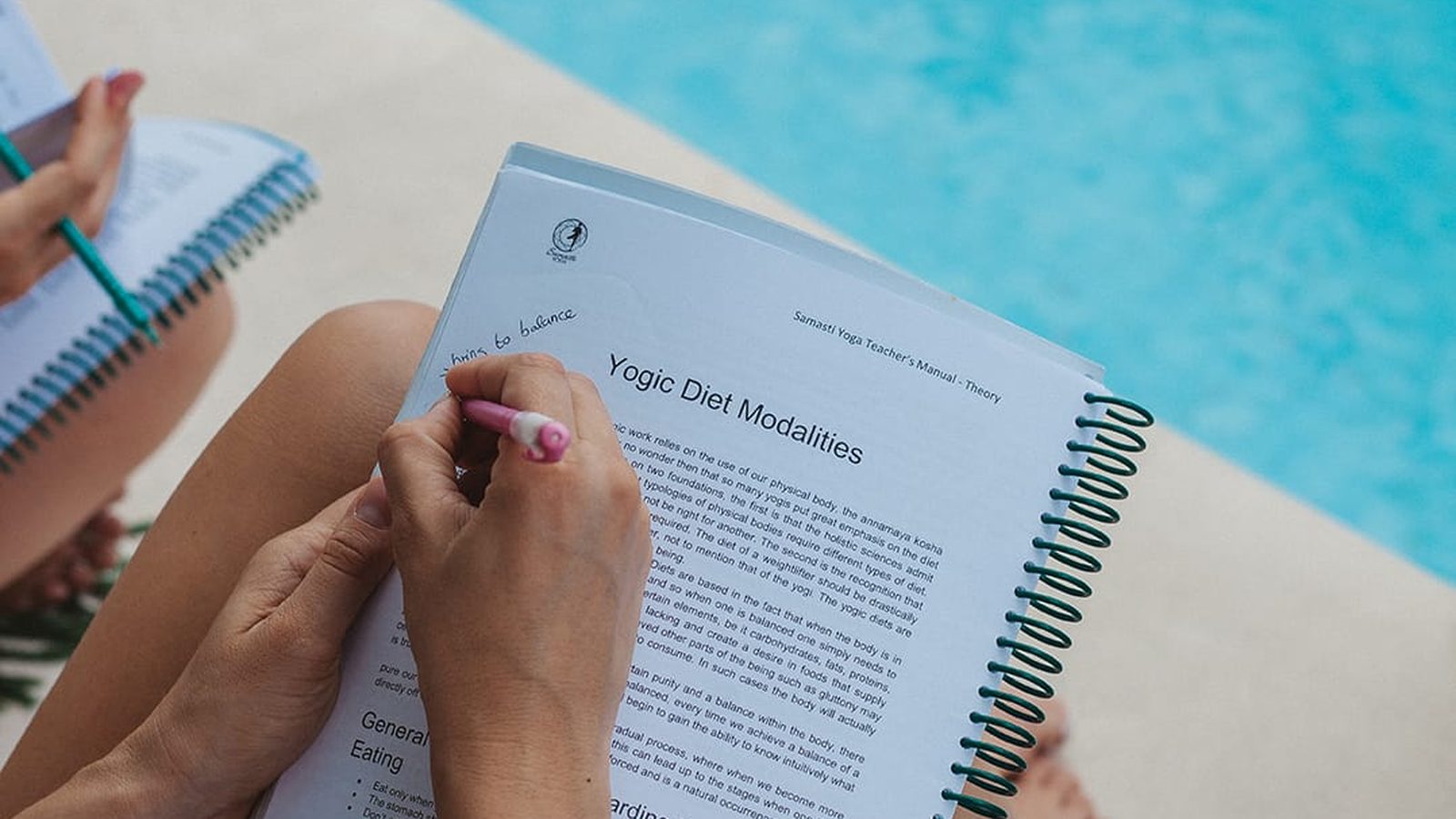
If you have spent any time researching a 200 hour yoga teacher training in Bali, you already know the feeling. Hundreds of schools, and every one of them shows the same photos, the same Yoga Alliance badge, the same promise of transformation. They cannot all be right for you, and after the tenth tab they blur into one. The way out is not more research. It is a short list of questions that most schools cannot answer well, asked directly, before you compare anything else. This guide gives you those questions and shows you what the answers reveal.
The short answer. Email your shortlisted schools and ask six things:
- Who teaches anatomy, and what are their clinical qualifications?
- Is it one group start to finish, or a rolling intake?
- Do students and teachers eat together?
- How long has the school been running, and how many graduates does it have?
- What is the real maximum group size?
- What happens after you graduate?
The replies will sort your list faster than another week of browsing. The rest of this article explains what each answer tells you.
Why every yoga teacher training in Bali looks identical online
Because the things schools advertise are the things every school has. Yoga Alliance registration is a baseline, not a distinction: it confirms a syllabus template was filed against a minimum standard, and it says nothing about who teaches it or how well. A beautiful shala, a pool and rice field views are real, and they are also everywhere on the island. Once every school holds the same badge and the same photographer, the website stops being a way to tell them apart.
The real differences sit below the marketing, in things that are awkward to photograph: who is actually teaching on the days you are there, whether the group starts and finishes together, how the syllabus is built, and whether the school will still exist in five years. None of that fits on a homepage banner, which is exactly why it is where you should look.
The questions that cut through, and why you should email schools directly
Ask the school, not the website. Any training worth a month of your life will answer a direct message, and the speed, warmth and honesty of the reply is itself information. A school that answers with a booking link has told you something. A school where a teacher writes back has told you something too. Here is what to ask.
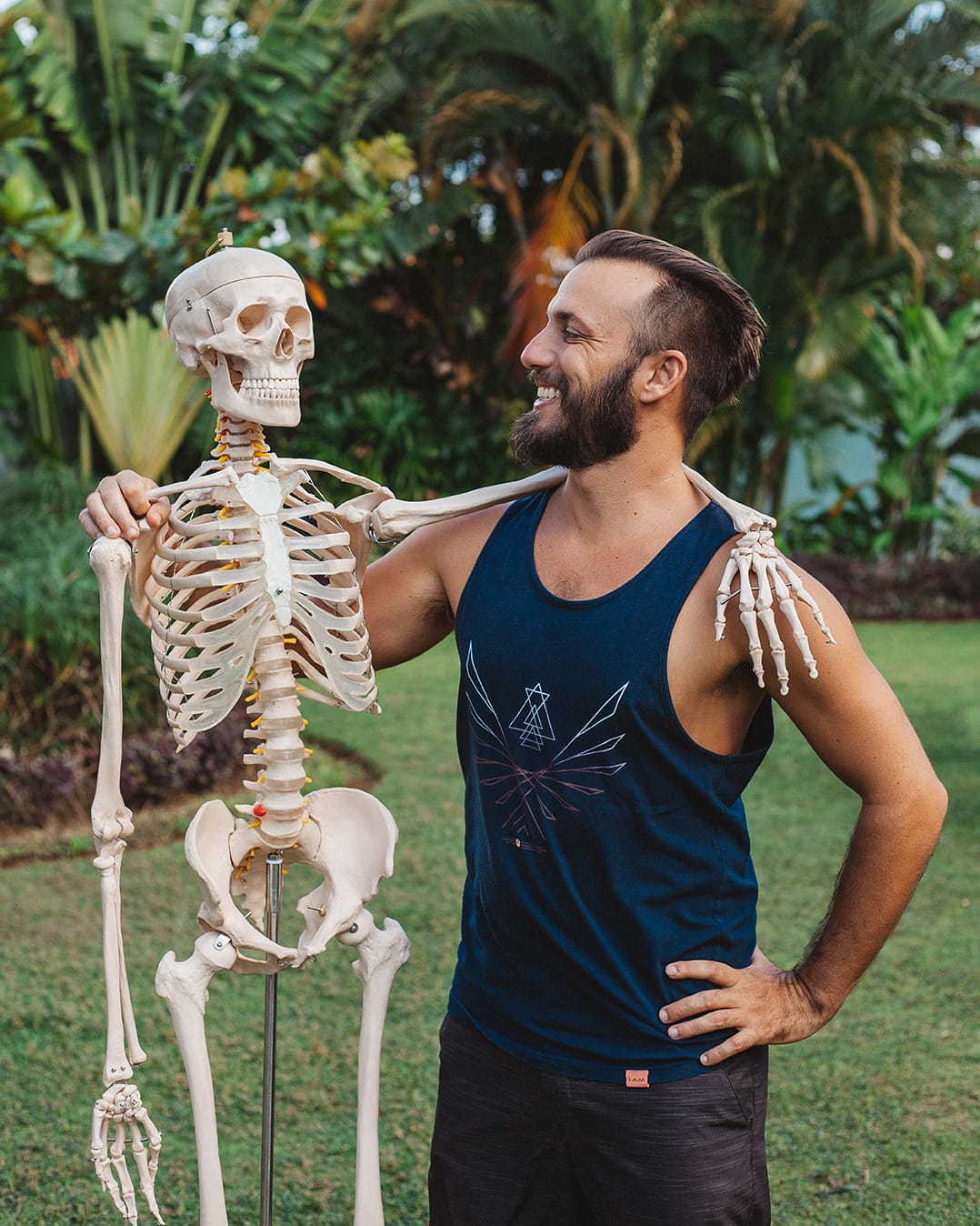
Who teaches anatomy, and what are their clinical qualifications? Anatomy is where trainings most often go thin: a yoga teacher repeating what they were told a certificate ago, or a visiting lecturer who leaves after two days. Ask who teaches it, what their qualification is, and how many of the 200 hours they are actually in the room. You are allowed to want a real answer. At Samasti the anatomy is taught by a qualified physiotherapist across the whole training, and any school doing something similar will be glad you asked.
Is it one cohesive group, or a rolling intake? Some trainings run as modules where people join and leave at different points, or split into online and in person halves. Others take one group through one arc together. This changes everything about the experience: a group that begins on day one and graduates on day 28 together builds the trust that lets the deeper work happen. Ask how many students start and finish on the same dates.
Do students and teachers eat together? It sounds small. It is not. Shared meals are where a group becomes a group, where you digest the morning session in both senses, and where teachers stop being figures at the front of a shala. Ask whether meals are included, whether they are taken together, and whether the teachers are at the table. A school that caters this deliberately is telling you how it thinks about community.

How long has the school been running, and how many people has it trained? Bali has wonderful schools that have taught for a decade, and it has trainings assembled last season around a rented venue. Longevity is not everything, but a school that has run for more than ten years and can point to hundreds of graduates has survived on its reputation, and its teachers have answered every question you are about to ask many times before. Samasti has been training teachers since 2016, with more than 500 graduates. Whatever school you ask, the number should be easy for them to give.
What is the real group size? “Small group” means nothing until it is a number. A cap of 20 is a different training from a room of 45, in adjustments, in speaking time, in whether the lead teacher knows your name and your knee history by the end of week one. Ask for the maximum, and ask what the last cohort actually was.
What happens after you graduate? A 200 hour training is the beginning of teaching, not the end, and the first year afterwards is where most new teachers either find their feet or quietly stop. Ask whether the school stays in your life: an active alumni community, continuing education, a pathway back. At Samasti, graduates join an alumni circle that keeps meeting long after the course, ongoing continuing education events are free for graduates, and alumni who have spent a year teaching can apply to return as training assistants. Whatever school you ask, a concrete answer here separates a school from a certificate vendor.

What one training arc gives you that a menu of modules cannot
A syllabus built as one continuous arc means each week stands on the one before it: the anatomy informs the asana, the asana opens the somatic work, and the teaching practice at the end draws on all of it. When a training is assembled from interchangeable modules and rotating guest teachers, each piece can be good and the whole can still not add up, because nobody is holding the thread. When you ask a school about its syllabus, ask who designed it, whether the same lead teachers carry it start to finish, and how the weeks build. The answer tells you whether you are buying a course or a curriculum.
How to use reviews and Reddit without being misled by either
Reddit threads are honest and they are also one person’s month. They are useful for spotting patterns, several unrelated people praising or warning about the same school means something, and useless as a verdict, because a training that transformed one person genuinely did not suit another. Google reviews are better read for volume, recency and detail than for the star number alone: in this category almost everyone shows five stars, so read what reviewers actually describe. Mentions of specific teachers by name, of anatomy, of the group, are worth more than superlatives. And weigh recent reviews most, because schools change hands and change teachers. Then close the laptop and write to the two or three schools still standing, with the questions above. Ten minutes of correspondence will tell you more than another evening of tabs.
What a training in Bali costs, and what the price is telling you
Prices for a 200 hour training in Bali run from under 1,500 US dollars to above 4,000, and the spread is not random. At the lower end you are typically buying tuition alone, larger groups, and accommodation and meals arranged separately or not at all. As the price rises you are mostly buying smaller groups, senior teachers who stay for the whole training, and everything under one roof: room, all meals, the full arc together. Neither end is a trick, they are different products. The mistake is comparing the headline numbers without asking each school what theirs includes, so add that to your questions. We will publish a full breakdown of Bali training costs separately, because the subject deserves its own article.
The short version
You cannot read your way out of the overwhelm, because the websites are designed to be indistinguishable. Choose with the six questions instead, and let the replies do the sorting. If the answers you are hoping for sound like a physiotherapist teaching anatomy for 260 contact hours over 28 days, one cohort of at most 20 eating every meal together, at a school in Canggu that has done this for more than a decade, then our yoga teacher training in Bali may be the one to write to first. Ask us the hard questions. We enjoy them.
Still deciding whether a training is right for you at all, or unsure what RYT and YTT even mean? Start with our insider’s guide to choosing the right yoga teacher training, then come back to the Bali question.
If one of your shortlisted schools describes itself as trauma informed, it is worth knowing what that should mean in practice. We have written about what trauma informed actually means in a yoga training, and what it does not.
Sean Goldberg qualified as a physiotherapist in Australia, and he is a clinical Pilates teacher and the lead teacher at Samasti Yoga in Canggu, Bali, where he has trained yoga teachers for more than a decade.