


Who you would be working with
Sean Goldberg
BSc Physiotherapy, Australia, 2004. Creator of S.I.T., Working with chronic pain, mindfulness and the nervous system.
My training is in physiotherapy, and I work specifically with stored emotions and trauma in the body. Years of work with chronic pain led me to the same conclusion again and again: the pains the body reports are more than the physical tissues can explain.
I am also the founder of Samasti, where I run somatic yoga teacher trainings in Bali. These teachings are the result of my personal journey, with countless teachers around the world and form the foundation of the courses.
I am not a psychologist and I do not diagnose. What I do is help you increase your capacity to feel what is already there. If something needs clinical care, I will say so and point you to someone who does it properly.
Who this is for
Most people come because of one of these symptoms.
You do not need a diagnosis, a history of therapy, or the right words for it. One of these being true is enough to start.
You feel stuck
Life works on paper and something in it will not move. Not a crisis. More like a year that looks a lot like the last one.
The same thing keeps happening
Different job, different partner, same ending. You keep fighting over the same issues and never find resolution.
Small things set off big reactions
A comment, a tone of voice, a message left unanswered, and the rest of the day is gone. Afterwards you cannot explain why you so effected.
Anxiety with no event attached
Nothing is wrong and your system is braced anyway. Difficulty with sleep, pressure in the stomach, waking with a clenched jaw, tightness in the chest.
Constant guilt, shame or blame
It is your fault, or it is theirs, and the argument never finishes. Both versions are exhausting to carry.
Pain that no scan explains
Back, neck, gut, shoulders. Treated, massaged, imaged, and still there. This is where the physiotherapy meets somatic therapy.
The arc of the work
What changes, and roughly the order it changes in.
Most people arrive somewhere in the middle of this. Wherever that is, is where we start. One session might move you a step, or half of one, and you may pass through some of these stages more than once, each time getting another piece of your puzzle.
Growth is never in a straight line
Recognition
Something is not right and it is not passing on its own. You may not be able to name it beyond stuck, or tired, or braced for something. Most people carry this for years before saying it out loud to anyone.
Seeing what it costs you now
Not the theory of it. How it shows up on a Tuesday. At work, with your partner, with your children, in the hour before you sleep.
The pattern, and the decision underneath it
You start to see the same pattern in what happened this week, in the last relationship, and even possibly in your childhood. It stops looking like bad luck and starts looking like something learned. Underneath it there is usually a decision made when you were young: “I never want to feel that way again”. Everything since this decision has been built to keep that promise to yourself… and it worked. That is why it is still running.
Most work of this kind stops here, with a good explanation. An explanation is not a change.
Meeting the feeling it was protecting you from
Grief, shame, fear, loneliness. Finding which one it is, and where it sits in your body, is the turning point. This is the part you decided once never to do again, which is why the three steps above have to come first.
Capacity
You build the capacity to hold the feeling rather than manage it or get rid of it. Not once and not dramatically. A little more each time, which is why none of this is rushed and why nothing is forced.
Freedom
Once the feeling can be felt, the fear of it goes. The pattern loses its grip and stops pervading everything in your life. What is left is choice, and that is what people call freedom.
If you are in crisis right now, this is not the right first step and I will say so on the call. Safety comes before any of this, and the two do not mix well.
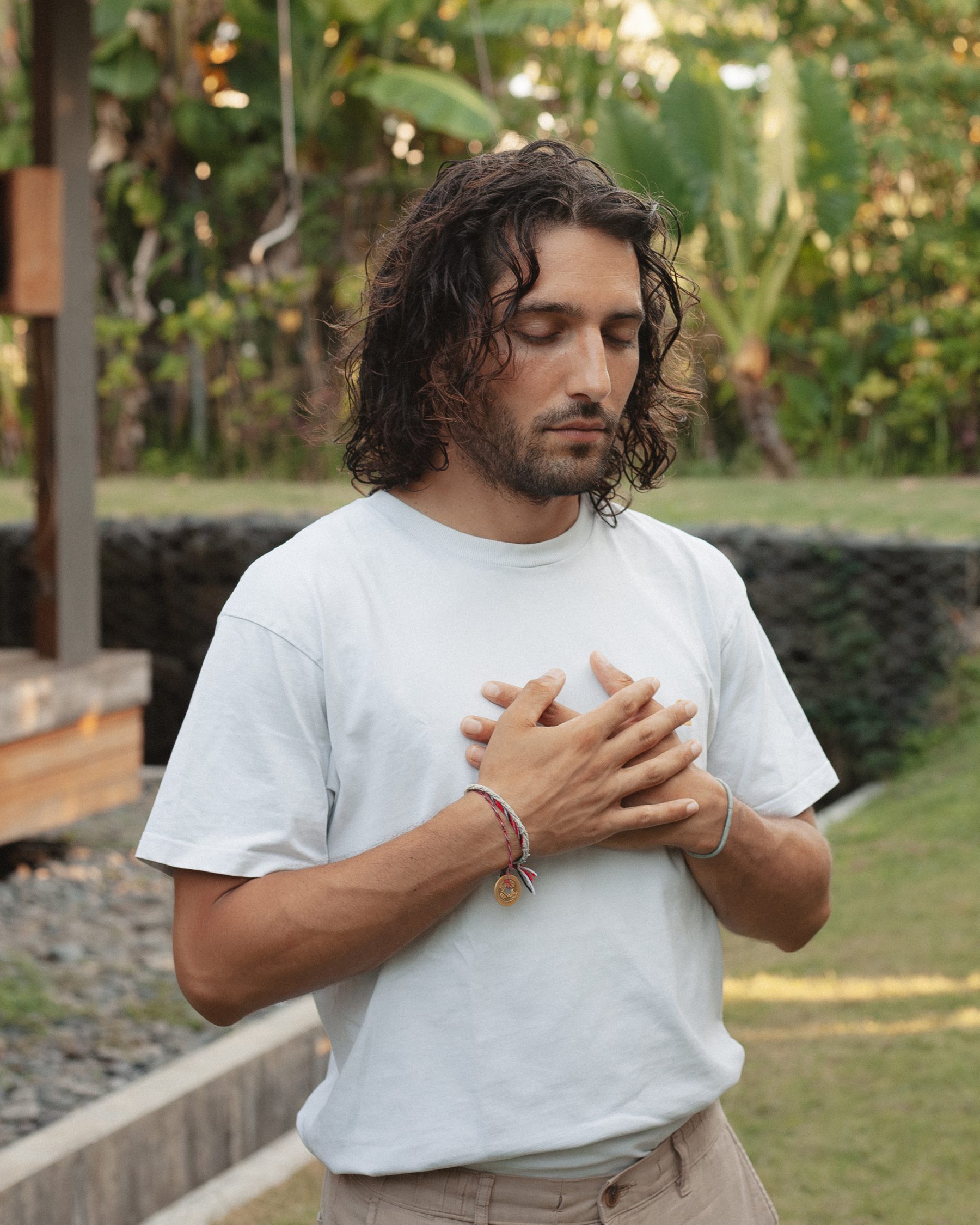
Once the feeling can be felt, the fear of it goes.
Inside a session
Sixty minutes, and roughly this shape every time.
Nothing is sprung on you. You will know where you are in the hour, and you can stop at any point in it.
A minute of quiet, then one breath
We start the same way every time so your system knows where it is. In through the nose, out through the mouth, and then we begin.
One recent moment, not your life story
A specific thing that got you this week. Small is better than dramatic, because a small one is quiet enough to take apart. We work backwards from it to find where the drop actually started.
The map
We trace that moment to where it was learned and name the belief underneath it and the strategy built on top. This part is understanding. It does not fix anything on its own and I will say so out loud.
Down into the body
Eyes closed. Chair, feet, skin, breath. We find where the feeling actually lives and, instead of getting rid of it, we make room for it. Nothing is forced, we go a bite at a time, and you stay in control the whole way.
Back into the room, and one thing to take with you
Two or three small things for the week ahead. Never a long list. If you do not do them, that is information, not failure.
What we are aiming at
The feeling does not get smaller. The space around it gets bigger.
Most approaches attempt to reduce what you feel. This one does not. The feeling is never the enemy. What grows is your capacity to be present with it, and once that is big enough the feeling stops running the show.
Where most people start. The feeling fills nearly all the room there is.
A few sessions in. The same feeling, with space around it.
You can feel it and still be here. That is the part people call freedom.
the coral circle is the same size in all three
Why the body
Referred pain, but for feeling.
In physiotherapy, referred pain is pain you feel in one place whose source is somewhere else entirely. Treat where it hurts and it comes back, because you never went to the source.
The name for it
Somatic Inquiry Technique (S.I.T.)
Somatic, because the work happens in the body, not just in the head.
Inquiry, because the goal is to feel rather than fix.
Technique, because it is a method you learn, not a mystery.
The initials say what it teaches: to sit with what you feel.
Years of work with chronic pain taught me that the same thing happens with feeling. The symptom shows up in the body. The source is usually a long way from it.
So these sessions do not stop at insight. Understanding a pattern is the map. Feeling it in the body is what actually moves it.

Being straight with you
What this is not, and who it is not for.
Better to read this now than to find out in the first ten minutes. If you are in the right column, say so on the call and I will point you somewhere more useful.
What this is not
Not clinical psychology or psychiatry, and not a replacement for either.
Not a physiotherapy consultation. I cannot assess your body properly through a screen.
Not crisis support. There is no out of hours line and I am in a very different time zone.
Not a yoga class. No asana happens in a session.
Not a programme. There is no package to buy and no number of sessions you owe.
Who it is not for, plainly
Anyone who wants the feeling removed rather than met. That is a reasonable thing to want and it is not what happens here.
Anyone hoping to talk it through and stay above the neck. The talking is the setup, not the work.
Anyone in acute crisis, or at risk of harming themselves. That needs care with someone local to you, now.
Anyone in active psychiatric treatment, unless the person treating you knows about this and agrees it sits alongside.
Anyone looking for a diagnosis, a letter, or a report. I do not produce any of them.
Not sure which column you are in? That is exactly what the free call is for.
Start
Two ways in.
Free, 15 minutes
Not sure yet? Talk to me first.
Fifteen minutes, free, nothing to prepare. Send one WhatsApp message and we set a time. You tell me what is going on and I tell you honestly whether this is the right thing for you. Sometimes the answer is no, and I will say so.
One tap sends the message for you. I reply myself with two or three times in your own time zone.
Single session
100 USD
Charged in Indonesian rupiah at today’s rate, about Rp 1,790,000
60 minutes, one to one, online. No package, no subscription, no minimum. Paid at the time of booking.
Book and payAlready know you want to start? Go straight here and skip the call.
After you book
You pick a time in your own time zone, pay, and get a video link by email. Nothing to prepare and nothing to fill in. Bring one recent moment that got you, if you have one.
Questions
Before you book.
Is this therapy?+
It is somatic work informed by psychotherapy and by a background in physiotherapy. It is not clinical psychology and it does not replace it. If you are in crisis, or already working with a psychiatrist, tell me on the call and we will work out whether this fits alongside that.
Do I need to have done yoga, or meditation, or anything?+
No. Nothing is asked of you that you have not done before. Most of the session is talking.
What if I cannot feel anything in my body?+
That is the most common starting point and it is not a problem. Not being able to feel an area is information in itself, and building the capacity is part of the work.
What if I cry, or nothing happens?+
Both are fine and both are normal. Nothing is being aimed at. You are not performing a breakthrough.
Can this help my chronic pain?+
Sometimes, and I will not promise it. Where pain has an emotional component this work reaches it. Where it is structural it needs a physiotherapist looking at your body in person. I can usually tell you which conversation we are having.
How many will I need?+
I do not sell packages and I will not guess a number. Come once and see.
Is it confidential?+
Yes. Nothing is shared, and nothing is recorded without you saying yes on the day.
What do I need for a session?+
Sixty minutes, by video, wherever you are. A quiet room, headphones, and a door you can close. Headphones matter more than a good camera.
What about time zones?+
I am in Bali and already work with people in Europe, the Gulf and Asia. We agree a time over WhatsApp, in your own time zone.
Is the session recorded?+
Only if you ask for it. I send you the file and a short written summary, then delete my copy. You can change your mind at any point, including afterwards. I do not ask you for a medical or biographical history.
What if I need to move or cancel?+
Sessions are paid for when you book. Move or cancel with 24 hours notice and there is no charge. Life happens, so talk to me if it is shorter than that.
What do I actually do between sessions?+
Two or three small things, agreed at the end of the hour. Usually fifteen minutes of sitting, or noticing something in your body at the end of the day rather than analysing it. If you do not do them we make them smaller, not bigger.
What if my connection drops, or the room is not private?+
If we lose each other, reconnect on the same link and we pick up. If you cannot get a private room, tell me before we start and we work differently, with less out loud. Headphones matter more than a good camera.

Start with a conversation.
Fifteen minutes, free, and no obligation at the end of it.