
How Many Yogic Paths Are There Actually?
By Tomer Weiss. Tomer teaches on Samasti’s Tantra and the Chakras online course.
In short: most yoga teacher trainings teach the four paths of yoga, which are Karma Yoga, Bhakti Yoga, Jñāna Yoga and Rāja Yoga. That count of four dates from Swami Vivekananda, who published a book on each path from 1896 to 1899. In this excerpt from his book, Tomer Weiss counts six traditional paths (Karma, Bhakti, Jñāna, Haṭha, Tantra and Non-path Yoga) and adds two that are controversial or still emerging.
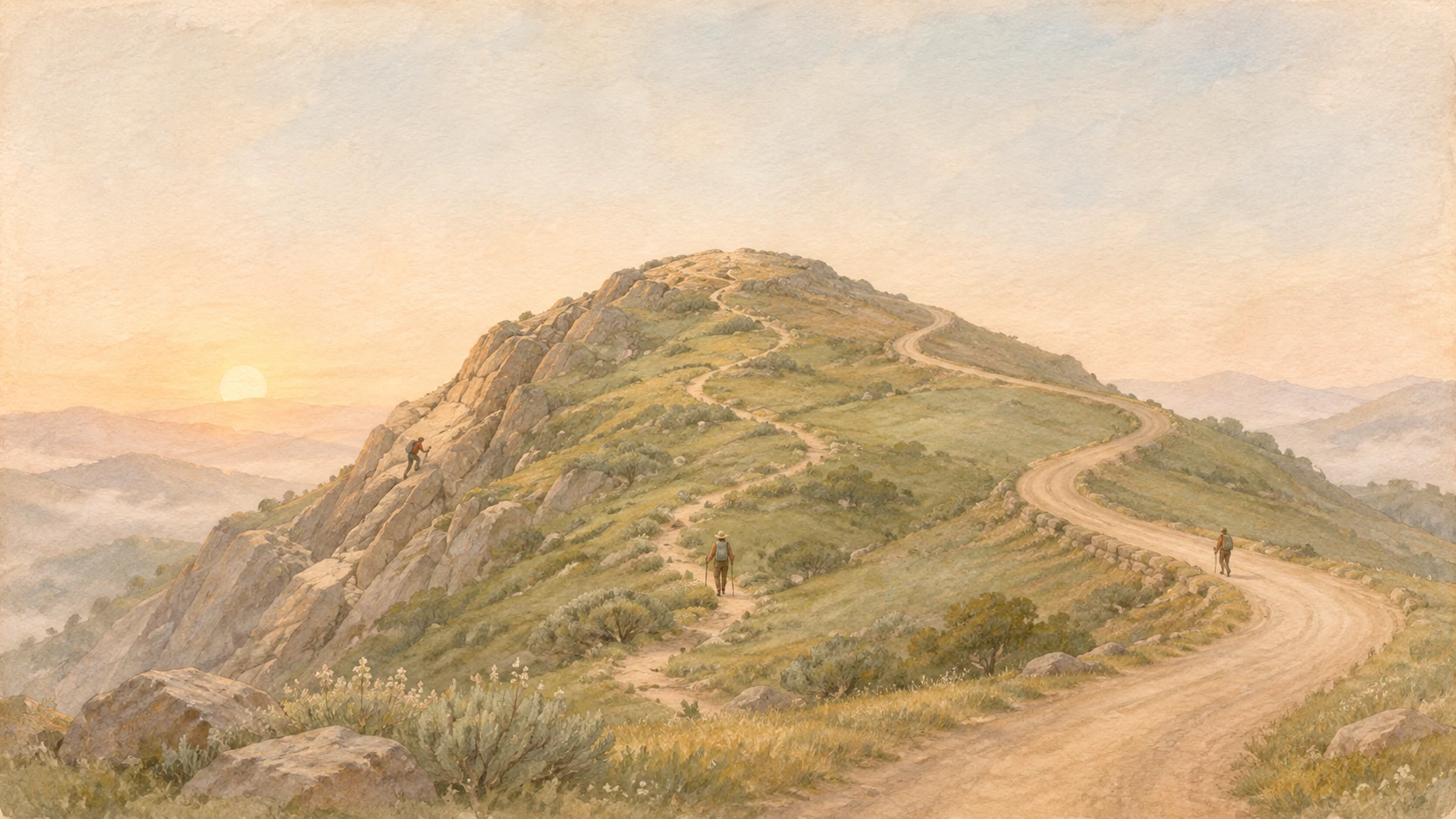
The spiritual path is sometimes likened to climbing a mountain. There are multiple ways to reach the summit: the steep rock face, the winding hiking trail, the road that curves gently around the base.
The question arises, which path is best?
The answer depends entirely on who is climbing. The rock climber moves fastest on the vertical wall. The hiker, who doesn’t know how to climb, can still reach the top by the winding trail, and someone in a wheelchair might need the smoothness of the road. There are multiple paths, none inherently better than another, each suiting a different person, all reaching the same summit.
Now imagine the absurdity of the rock climber trying to use his climbing techniques on the hiking trail, lying flat, grasping at small stones, pulling himself along the ground while other hikers walk casually past. It isn’t that one approach is better. It’s that each serves a different nature and capacity.
When you choose a path that doesn’t utilize your talents, doesn’t fit with who you are, doesn’t inspire you, and doesn’t feel right, the journey becomes unnecessarily hard. You suffer along the way, not because the destination is out of reach, but because you are working against your own nature.
Why do we sort the paths of yoga into categories?
Countless yogic paths have evolved over time. If we tried to catalog every variation offered by yogis, meditators, and teachers across centuries, we would easily reach into the thousands. It therefore helps to organize this landscape into meaningful categories, ones that can guide us toward the approaches most likely to fit our temperament and constitution.

We should be clear, though: All these classifications are ultimately man-made. Some are more logical than others. Some group paths by instrument, by which part of ourselves is being engaged, whether that’s primarily the mind, the body, the emotions, or actions in the world. Others are organized more philosophically, by what the final goal is (union or yoking), or by technique, or by tradition.
But no matter how logical a system appears, it’s still something we made up, not something divinely ordained. These classifications are tools for making sense of the plethora of systems, saying: “Alright, this one is a little like that, this one is a little different”. But we can’t force them all into neat boxes. Whenever we try, something gets left out, or we find ourselves asking which box something belongs in. It’s like a cup. Do you file it under kitchenware or living room items? I use mine in both. Many yoga paths are the same way, overlapping in ways that resist tidy classification.
Where do the four paths of yoga come from?
The most widely cited classification today is the fourfold division: Karma Yoga, Bhakti Yoga, Jñāna Yoga, and Rāja Yoga. This was popularized by Swami Vivekananda in a series of books, one on each path, published from 1896 to 1899. His framework took hold and is still treated as authoritative in many circles. But it doesn’t cover the whole field. So in this chapter I’ll offer a different classification, one that I feel comes closer to capturing most, if not all, of what yoga encompasses.
Vivekananda’s system didn’t come from nowhere. It built on one of the earliest attempts at classification, found in the Bhagavad Gītā, composed somewhere between the 5th century BCE and the 2nd century CE.
The Bhagavad Gītā is part of the Mahābhārata, India’s great epic, a symbolic tale of the struggle between good and evil told through the wars of two sides of a royal family over dominion of the land. Embedded within this monumental work is the Gītā, “the divine song”, a dialogue in which, on the field of battle, moments before the decisive battle begins, Krishna (Kṛṣṇa), the divine avatar of Vishnu (Viṣṇu), teaches Arjuna about life, the universe, and the different yogas. In its eighteen chapters, these yogas fall into three overarching approaches:
- Karma Yoga: the yoga of action (selfless service), using our deeds as the instrument.
- Bhakti Yoga: the yoga of devotion, using our emotions as the instrument.
- Jñāna Yoga: the yoga of wisdom, using the mind as the instrument.
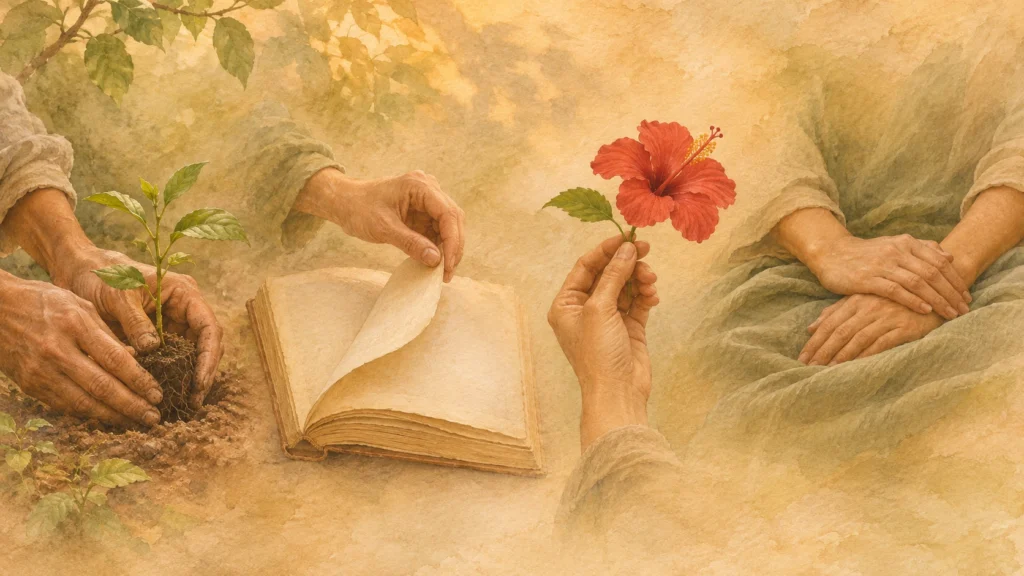
To these three, Swami Vivekananda added a fourth: the yoga described in the Yoga Sūtra of Patañjali, which he called Rāja Yoga, the royal yoga, on the grounds that it was considered complex and refined, a path suited to those of elevated intelligence, supposedly fit only for “kings of noble qualities”. The term Rāja Yoga had long been used in India to describe many advanced forms of yoga, but since the 19th century it has been applied almost exclusively to Patañjali’s system.
Is Rāja Yoga a path of its own?
For me, though, Rāja Yoga belongs within Jñāna Yoga. Why? Because at its core it is a form of meditation, highly intricate and methodical, rich with techniques, but still a discipline of the mind. And the mind is Jñāna Yoga’s instrument.
Which paths do the four leave out?
So we come back to three. To these I would add three more classical categories, and two that may be more controversial.
The first addition is Haṭha Yoga, sometimes called Kriyā Yoga. It is the yoga of the body, the physical yoga most people recognize. Unlike Karma Yoga, which works through external action in the world, Haṭha works with the body itself, both gross and subtle, as the field of transformation.
The second is Tantra Yoga, which arose primarily in the medieval period. What makes it distinctive is that its instrument is not the body, mind, emotion, or action alone, but the external world itself.
Tantra gave rise to many yogas. Mantra Yoga uses the repetition of sound, not as a form of concentration or devotion, but as a complete path in its own right. Laya Yoga works toward dissolving the ego like salt in the ocean of universal consciousness, often using inner sounds and physical practices to generate them. Devatā Yoga works through deep identification with a deity as a universal principle, until the boundary between the practitioner and the deity dissolves into union. And there are many others.
In fact, Haṭha Yoga itself comes from the Tantric tradition, but I separate it out because its method is distinct. Tantra, as I see it, is about ritual, a kind of symbolic technology that often defies linear explanation.
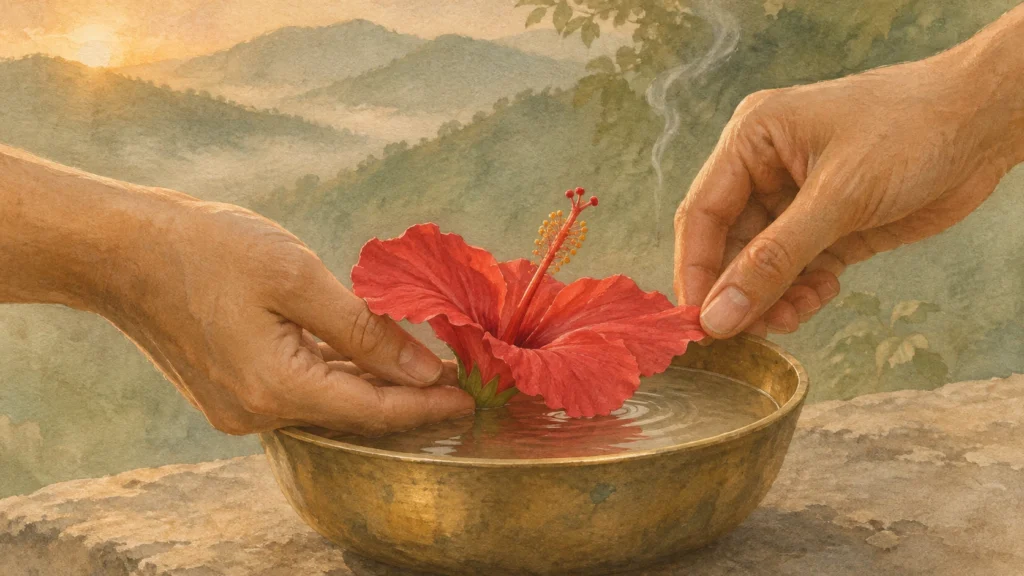
I’ll give you an example. In Tantra you might work with a flower. Not by meditating on it (that would be Rāja Yoga) but by taking a specific flower, at a specific time, waving it in a certain direction, saying a mantra, placing it in water. And through that precise combination of elements, somehow, unity is achieved. Though it might make no logical sense, my experience has been that it works.
The third category is what I would call the non-path paths. These are traditions that point directly to reality or awakening without prescribing a structured method, emphasizing spontaneity, grace, or the simple recognition of what already is.
So how many yogic paths are there?
So, to summarize, I see traditional yoga as falling into six main categories:
- Karma Yoga: action
- Bhakti Yoga: emotion
- Jñāna Yoga: mind
- Haṭha Yoga: body
- Tantra Yoga: the external world
- Non-path Yoga: spontaneous realization
To these I would add two paths that are either controversial or still emerging:
- Psychedelic Yoga, working with entheogens or psychedelic substances as a means of reaching states of union.
- Technological Yoga, a path still developing and yet to prove its results, utilizing various technological means to achieve union.
There are, of course, other ways to organize these practices, and some traditions still don’t fit neatly even within this framework, including some quite traditional ones. But I feel this covers the field as well as anything I have encountered.
This article is an excerpt from the chapter “The Many Paths” in Tomer Weiss’s book Making Sense of Yoga, which is available on Amazon. The different yogic paths are also part of the philosophy taught on Samasti’s yoga teacher training in Bali.